
German for doctors — from zero to medical C1 and the FSP in 12 months.
Are you a doctor who wants to practise in Germany, Switzerland or Austria?
All three countries need doctors and assess your degree wherever you trained. The step we walk with you is the language: general German from zero (A0) to C1, the official B2 examination and medical German for the hospital interview and for the Fachsprachprüfung (FSP). Everything explained in English, in groups of 3 to 5 doctors, with one live class a week.
One live class a week · €150/month · put your name down and we write to you with the starting date
Already know some German? Take the German test — you start from your level and finish sooner.
The programme at a glance
The KlinikDeutsch German Programme for Doctors takes doctors from any country in the world from zero (A0) to C1 and medical German in 12 months — to practise in Germany, Switzerland or Austria and to prepare the Fachsprachprüfung. Classes are taught in English. Enrolment is open; here are the facts:
- Who it is for
- Doctors from any country in the world, heading for Germany, Switzerland or Austria
- Duration
- 12 months from zero (A0) to C1, in three phases of four months
- Live class
- 60 minutes once a week; the time is agreed with your group — evenings or weekends
- Group size
- Three to five doctors
- Price
- €150 a month, the same fee in every phase
- Between classes
- Digital classroom open 24 h with an AI tutor, recorded classes and unlimited written corrections
- Exams it prepares
- The official B2 examination (telc, Goethe or ÖSD) and the German Fachsprachprüfung (FSP)
- For Germany
- Official B2 for the Approbation file and the FSP before the Ärztekammer
- For Austria
- C1 for registration in the Ärzteliste and the Medical Chamber language examination
- For Switzerland
- B2 for the MedReg register, C1 in many cantons and the interview with the Chefarzt
- Start
- Any week: your place is active straight away and you begin the following week
- Language of the classes
- German explained in English, live by video call from any country
- Who teaches it
- KlinikDeutsch (Lernes Ltd.), a German school for healthcare professions
Page updated on · The administrative requirements are set by each German Bundesland, each Swiss canton and the Austrian Ärztekammer; the binding information is always the one given by the authority handling your file. · ¿Prefieres el programa explicado en español?
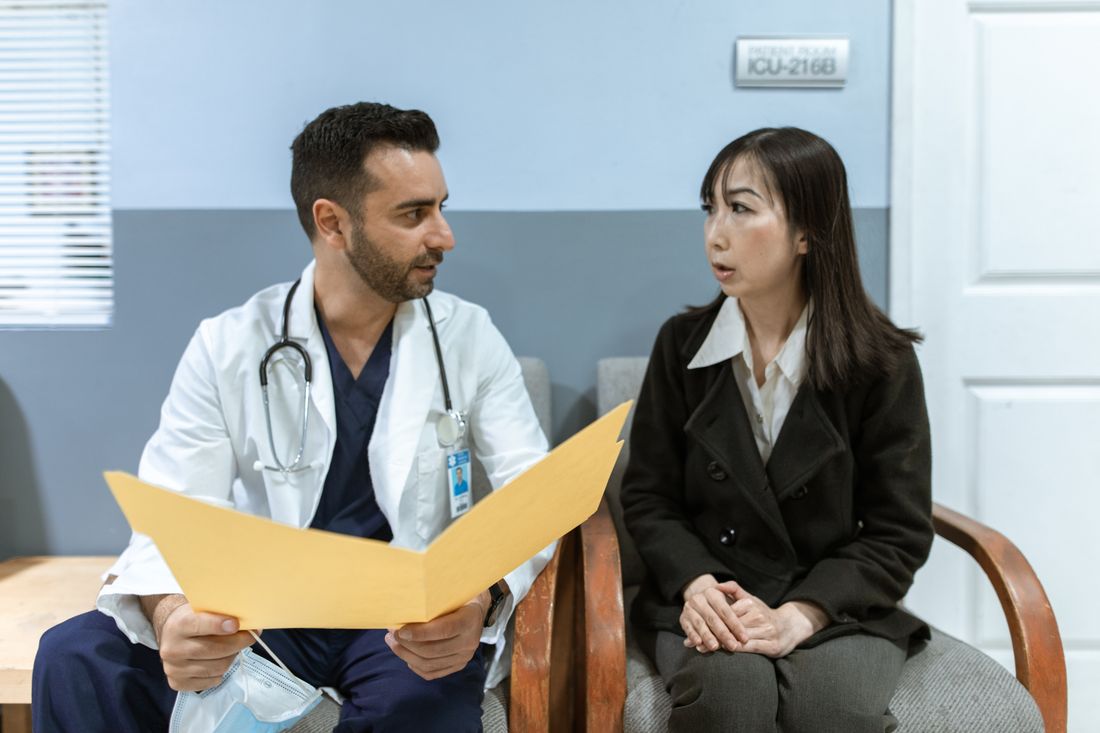
You have the degree. Now comes the language.
Every medical degree has its route to recognition in Germany, Switzerland and Austria, and each authority assesses it according to where you trained. What all three ask for, along with the hospitals, is the language: an official certificate and medical German that works on the ward. This programme covers both from beginning to end, with a clear 12-month calendar.
- Fast track: from zero to C1 in 12 months, with a month-by-month plan
- Mini groups: three to five doctors — you speak in every class
- Fits around your shifts: one live class of 60 minutes once a week
- Between classes: a digital classroom open 24 h with your AI tutor
- Every class is recorded in your student platform, to watch whenever you like
- Medical vocabulary from the first class: hospital words come in from day one
- Optional: one-to-one lessons and personal tutoring
Put your name down and the study plan reaches you by email
An official certificate and German that works in hospital
The programme runs on two tracks at once: the general German that proves your level to the authorities, and the medical German that opens the hospital door.
1 · The official B2 examination
We train you for the official B2 examination (telc, Goethe or ÖSD) with mock exams in all four skills, and you register at the official examination centre that suits you best. That certificate proves your language skills for the Swiss register of medical professions (MedReg), is the first document in the German Approbation file and is the step before the C1 that Austria asks for.
2 · Medical German
Fachsprache: history taking, examination, the medical report and talking to colleagues. It is what the Fachsprachprüfung (FSP) assesses before the German Ärztekammer, what is heard in the interview with the Chefarzt in Switzerland and what the Austrian Medical Chamber language examination measures.
Real simulations
Clinical cases and hospital interviews in class, plus AI conversation simulators in the digital classroom: Patientengespräch (history taking) and Kollegengespräch (case presentation), as often as you like.
A group of colleagues
Three to five doctors with the same goal. You practise conversations between colleagues, share your cases and every contribution is corrected on the spot.
Unlimited written corrections
You write a text or an Arztbrief and get it back corrected with clear explanations — nominal style, Konjunktiv I and medical vocabulary. As often as you like.
Private lessons and tutoring
As an optional extra: one-to-one lessons and personal tutoring to strengthen your speciality, prepare a particular interview or go through the documents each authority asks for.
Your 12 months, phase by phase
Three phases with one clear goal each. You always know where you are and what comes next.
Months 1–3 · from zero to A2
Foundations and first clinical contact. You start with the alphabet and pronunciation: the structure of German and everyday vocabulary, with no previous knowledge. From the second month come the parts of the body, the most frequent symptoms and the formal introduction to a patient: “Guten Tag, mein Name ist Dr. …”.
Months 4–8 · B1 and B2 + official exam
Fluency and the legal key. Sustained conversation and complex texts, with training for the official B2 examination (telc, Goethe or ÖSD), which you sit at the examination centre of your choice. In parallel you learn the structure of the Anamnese: history, pain, allergies and medication.
Months 9–12 · medical C1 (Fachsprache)
The German of the hospital. For Germany: full mock exams of the FSP with its three parts. For Switzerland: the interview with the Chefarzt, where you present your CV and your speciality. For Austria: the C1 level and the spoken medical German the Ärztekammer asks for.
In parallel · your paperwork
While you move forward with the language you prepare the rest: the documents for the Approbation, for MEBEKO recognition or for registration in the Ärzteliste, your CV in German format and your covering letter.
Every week you have your 60-minute live class in a group of three to five doctors; between classes you move forward in the KlinikDeutsch digital classroom, where your AI tutor answers at any hour. That guided work between sessions is what carries the 12-month pace.
What each country asks for
All three assess your degree and employ doctors trained abroad. What changes is the administrative route and the moment your German is measured.
Germany
Approbation · Fachsprachprüfung (FSP)
- Your degree
- The Approbation application is filed with the authority of the Bundesland where you want to work. With a European degree recognition is usually direct; with other degrees the authority compares your training and, where it finds differences, provides for the Kenntnisprüfung.
- General certificate
- An official B2 in general German.
- Medical language exam
- The Fachsprachprüfung before the Ärztekammer, at medical C1 level: history taking with the patient, the medical report (Arztbrief) and the case presentation to a colleague.
- Where your German is decided
- In the official examination — which is why the programme ends with full FSP mock exams.
Switzerland
MEBEKO · MedReg · cantonal licence
- Your degree
- MEBEKO (the Medical Professions Commission) examines your diploma and your specialist title and decides on their recognition.
- General certificate
- To enter your language skills in the MedReg register you need at least a B2 in a national language, with a recognised diploma less than six years old.
- Level for the cantonal licence
- Many cantons ask for C1 for the licence to practise (Berufsausübungsbewilligung). That is why the programme continues to C1.
- Where your German is decided
- In the interview with the Chefarzt and in daily work on the ward: the round, the phone, the report. Hence the weight of spoken medical German.
Austria
Ärztekammer · Ärzteliste · its own language exam
- Your degree
- The Österreichische Ärztekammer examines your diploma and your specialist title. Degrees obtained outside the European Economic Area also go through Nostrifizierung, the university equivalence procedure.
- General certificate
- German at C1 for registration in the Ärzteliste, which is what allows you to practise.
- Medical language exam
- The Ärztekammer has its own language examination for doctors, taken at the Österreichische Akademie der Ärzte.
- Where your German is decided
- In that examination and in the hospital — which is why the programme reaches C1 and trains spoken medical German.
The exact requirements are set by each Bundesland, each canton and the Austrian Ärztekammer, and it is worth confirming them with the competent authority before filing your application. In the tutoring sessions we go through the route to your destination with you.
Side by side: Germany, Switzerland and Austria
| Requirement | Germany 🇩🇪 | Switzerland 🇨🇭 | Austria 🇦🇹 |
|---|---|---|---|
| General German certificate | Official B2 in the Approbation file. | B2 to enter the language in the MedReg register; C1 in many cantons to practise. | C1 for registration in the Ärzteliste. |
| Medical German | Fachsprachprüfung (FSP) before the Ärztekammer, at medical C1 level. | Weighed in the hospital, in the interview with the Chefarzt and on the ward. | The Ärztekammer's own language examination, at the Österreichische Akademie der Ärzte. |
| Who assesses your degree | The health authority of the Bundesland where you want to work. | MEBEKO, which recognises both the medical degree and the specialist title. | The Österreichische Ärztekammer, and the university in the case of Nostrifizierung. |
| Your degree is from the EU or the EEA | Direct recognition for the Approbation. | Recognition by MEBEKO. | Recognition without Nostrifizierung. |
| Your degree is from outside the EU | Kenntnisprüfung (KP) — the medical knowledge examination, where the authority finds differences from German training. | Recognised once the degree has been recognised in an EU or EFTA country and you have practised there for three years. | Nostrifizierung at an Austrian university and, after that, recognition of your training. |
| Working while your file is processed | The Berufserlaubnis is a temporary permission: you practise and earn while you complete the file. | You practise with the cantonal licence, once your degree is recognised. | You practise once you are registered in the Ärzteliste. |
The exact requirements are set by each Bundesland, each canton and the Austrian Ärztekammer: it is worth confirming them with the competent authority before filing your application.
Glossary: what each term means
The words that appear on every form and every official website in the three countries. With these you read your own file with ease.
Approbation
The full medical licence, with no limit of time or place. It is granted by the health authority of the Bundesland where you file your application.
Berufserlaubnis
A temporary permission to practise while the Approbation file is completed. It is tied to one post and one deadline, and with it you already work and earn.
Fachsprachprüfung (FSP)
The official medical German examination before the Ärztekammer, at medical C1 level. Three parts: history taking with the patient, the medical report (Arztbrief) and the case presentation to a colleague.
Kenntnisprüfung
The medical knowledge examination, provided for when the authority finds differences between your training and the German one. With a European degree recognition is usually direct.
MEBEKO
The Medical Professions Commission. It is the authority that examines your medical degree and your specialist title and decides on their recognition.
MedReg
The register of medical professions. Your diploma and your language skills are entered there, evidenced by a recognised language diploma of at least B2 and less than six years old.
Berufsausübungsbewilligung
The cantonal licence to practise. Each canton grants it and many ask for C1 in a national language — which is why the programme reaches C1.
Ärzteliste
The Austrian register of doctors. Registration, handled by the Österreichische Ärztekammer, is what allows you to practise, and it asks for German at C1.
Nostrifizierung
The university procedure that declares a medical degree obtained outside the European Economic Area equivalent.
Official B2 examination
The general German diploma (telc, Goethe or ÖSD) that proves your level to the authorities: the first document in the German file and the one the Swiss register asks for.
In medicine, every word counts.
The exact word in the history, in the report and in the call to a colleague is part of clinical work. That is why here German is learned with hospital cases from the first month.
Starting point: the programme starts from zero (A0), without a word of German. If you already have a level, the placement test puts you at the right point in the plan.
€150 a month.
If you already have a level, you join the plan further along and your programme takes fewer months. The placement test tells you where you start.
Monthly fee · everything included from the first class
Everything included, from the first class.
- 4 live classes a month — 60 minutes, in a group of 3 to 5 doctors
- Every class is recorded in your student platform
- Digital classroom open 24 h with your AI tutor
- Digital medical German course included
- Conversation simulators: patient and colleague
- Unlimited written corrections, including the Arztbrief
- Preparation for the official B2 examination and the FSP
- Certificate of participation
Your place is active straight away · every group has three to five doctors
Already have some German? You join later
The price stays the same; what changes is where you start and how many months you usually need.
| Your German now | You join at | Usual months | Fee |
|---|---|---|---|
| From zeroLevel A0 · no previous German | Phase 1 · month 1 | 12 months | €150/month |
| A2You manage the basics | Phase 2 · month 5 | 8 months | €150/month |
| B1Sustained general conversation | Phase 2 advanced · month 7 | 6 months | €150/month |
| B2General certificate ready | Phase 3 · month 9 | 4 months | €150/month |
When you sign up you receive a short placement test by email, and with it we confirm which phase you join.
Already have B2 and looking only for the medical language at your own pace, without live classes? Then the digital medical German course is your fit — 100 % online with an AI tutor.
Frequently asked questions
Who is the programme for?
How long does it take?
How many students are there in a group?
Which official examination do I prepare?
Does it prepare the German Fachsprachprüfung (FSP)?
And in Switzerland and Austria, is there a medical language exam?
Can I really go from zero to C1 in 12 months while working as a doctor?
What if I am on call on the day of the class?
Is my specialist title recognised as well?
What is the difference between Germany, Switzerland and Austria?
Can I add private lessons?
I already have A2, B1 or B2. Do I start from the beginning?
How do I pay for the programme?
Do you also help with the paperwork?
Where can I join from?
When does the next group start?
Keep reading
How your medical degree is recognised and what level of German each country asks for.
Start now. Change your future.
You sign up today and the following week you are in your first live class, in a group of three to five doctors. €150 a month. Your place is active the moment you pay.
This is how it starts: you pay by card → you receive your login for the digital classroom and a short placement test → you join the phase of the plan that matches your level → in your first live class you speak German.
Three to five doctors per group · 60-minute class, recorded · digital classroom open around the clock
Prefer the programme explained in Spanish? Here is the Spanish-taught programme.
Still have a question? Write to info@klinikdeutsch.com and we answer the same day.