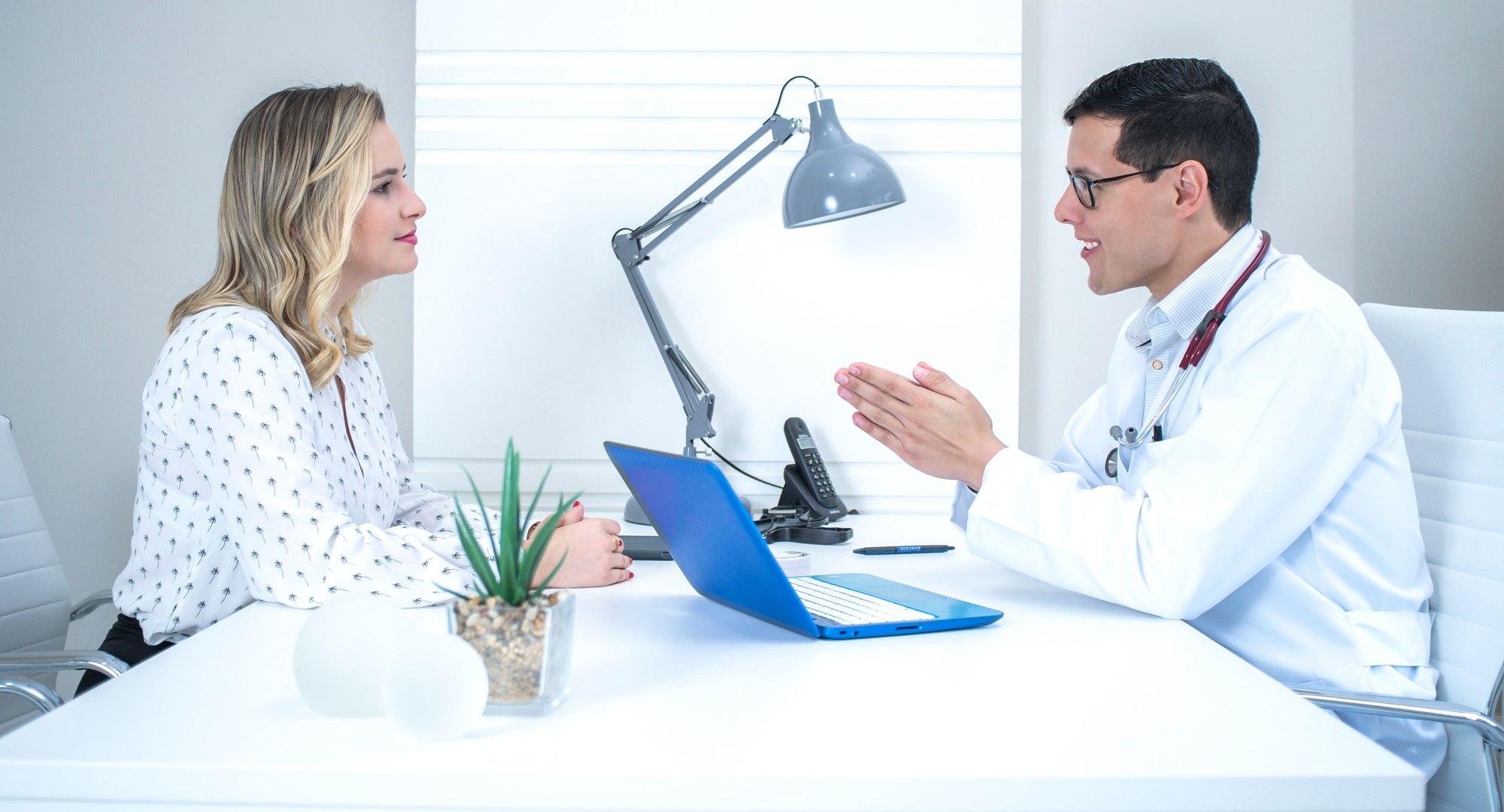
No German yet? Reach the official B2 in 12 months — at your own pace, from your own country.
For radiology technicians, laboratory technicians, physiotherapists, nurses, ATA and OTA.
Germany asks for one thing before your recognition moves: an official B2 certificate. This program takes you there in twelve months — one live class a week in a group of five people at most, a digital classroom that is open day and night, and everything explained in English.
One live class a week · €150/month · groups start in October
The language program at a glance
The KlinikDeutsch Language Program takes internationally trained healthcare professionals to the official B2 certificate in twelve months — the language proof that German recognition authorities and clinics ask for. Classes are taught in English, live, once a week, in groups of no more than five. All groups start in October 2026. Here are the facts:
- Who it is for
- Radiographers (MT-R), laboratory technicians (MT-L), physiotherapists, nurses, ATA and OTA and other healthcare professionals heading for Germany
- Goal
- The official B2 certificate — telc, Goethe-Institut or ÖSD. The program is also the exam preparation: exam simulations and exercises at every level, and the B2 trained part by part
- Duration
- 12 months, four levels of 12 weeks each
- Live class
- 60 minutes once a week, at a time agreed with your group, evenings or weekends
- Group size
- Five students at most
- Price
- €150 a month, the same fee at every level
- Between classes
- Digital classroom open 24 h with an AI tutor, recorded classes and written corrections. About five hours a week keeps you with your group; whoever gives more sits the exam sooner
- Start
- All groups start in October 2026
- Where you begin
- Your language certificate sets your level; if you have none, the placement test does — it is written in German
- Language of the classes
- German explained in English, live by video call from any country. In the classroom the AI tutor speaks every language and explains what you need in your mother tongue
- After B2
- The German program of your profession and, where your Bundesland requires it, preparation for the Fachsprachprüfung
- Who teaches it
- KlinikDeutsch (Lernes Ltd.), a German school for healthcare professions
Page updated on · The language level required for recognition is set by the authority of each German Bundesland; the binding information is always the one it gives. · ¿Prefieres el programa explicado en español?
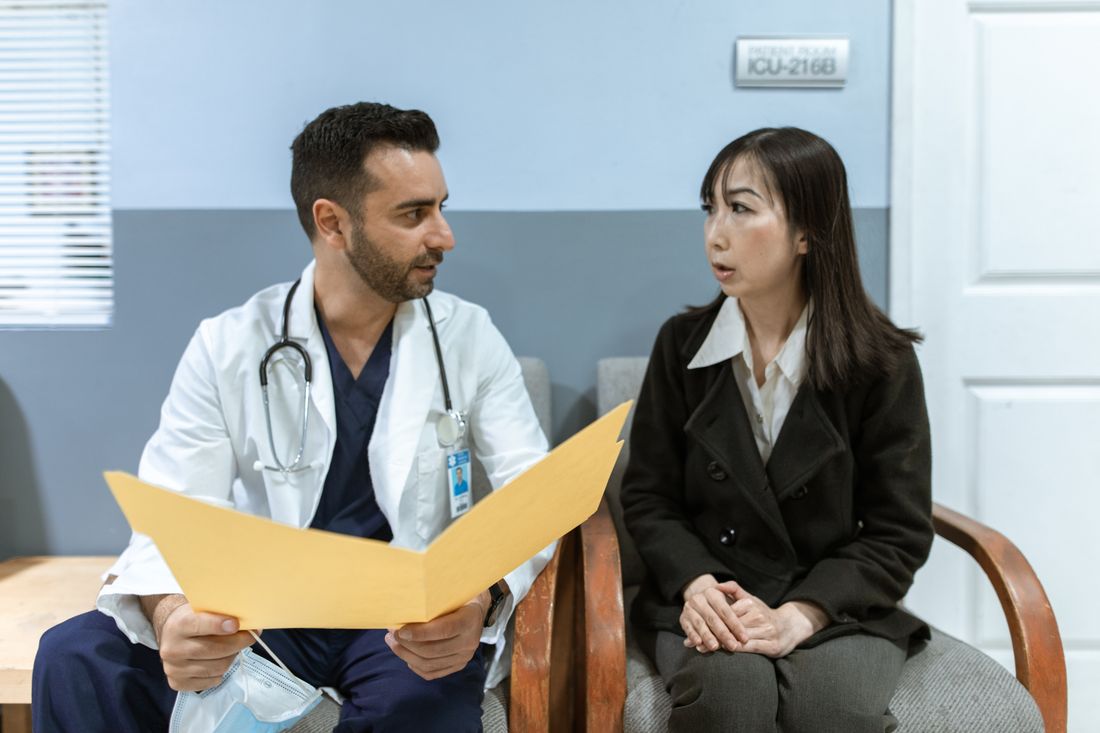
You have the profession. The language is the step that is left.
Your diploma is assessed by the authority of the Bundesland where you want to work. What every one of them asks for first, together with the clinics, is German — and for most healthcare professions that means an official B2 certificate. This program is built around that single goal, with a calendar you can see from day one.
- Targeted preparation for the official examination. Exam simulations and exercises at every level, and the telc, Goethe or ÖSD B2 trained part by part, at your own pace and with the exam date in view from the start.
- Every class is recorded. The recording is available to you for three months, to catch up on a session or review it before moving on.
- Compatible with your shifts and your routines. A single fixed hour a week. The rest of your study you organise at the times that fit your week best, from wherever you are.
- Speaking takes priority from the first class. In groups of five students at most you take part in every session and receive immediate correction from your teacher: the skill that decides the interview and the daily work on the ward.
- Explanations in your language, at any hour. Classes are taught with explanations in English, and the tutor in the digital classroom answers any question in your own language the moment it arises.
- Continuity into the German of your profession. On reaching B2, the German program for your specialty prepares you for communication with patients and colleagues from your first day at work.
- Your commitment sets your date. Five hours a week keeps you in step with your group; greater commitment brings your exam forward and shortens the road to Germany.
Reserve your place and the study plan reaches you by email
One program, the professions of the hospital
The road to B2 is the same for all of them. What changes afterwards is the German program — and that one is written for your own profession.
Radiography · MT-R
German to B2, then the German program for radiology technicians (MT-R): explaining an examination, the safety check, contrast media and the handover. Preparation for the Fachsprachprüfung in Bavaria included in that course.
Laboratory · MT-L
German to B2, then the German program for laboratory technicians (MT-L): taking in samples, a critical value on the phone, the handover at the bench.
Nursing
German to B2, then the German program for nurses: admission, the SBAR handover, the conversation with relatives and the documentation.
Physiotherapy
German to B2, then the German program for physiotherapists: the assessment, guiding an exercise, writing up the course of treatment. Preparation for the Bavarian Fachsprachprüfung included in that course.
ATA and OTA
German to B2 with the vocabulary of the operating theatre and anaesthesia from the very first levels — the words your team uses on day one.
Doctors and psychotherapists
Your own program runs separately, all the way to medical C1 and the Fachsprachprüfung.
The program adapts to your week
The live class is the only fixed appointment. The rest of your study you distribute according to your availability, so the program fits your current situation while you prepare the certificate that sets your recognition in motion. Every additional hour brings your exam date closer.
Before the class · independent preparation
You work through the lesson on your own: video, vocabulary with audio, grammar and self-correcting exercises. You arrive at the session with the content absorbed, so the 60 live minutes are devoted entirely to speaking practice.
The live class · speaking practice with correction
With five students at most, you take part several times in every session and your teacher corrects on the spot. After a year you face the interview with the confidence to speak, as well as to understand.
After the class · consolidation and progress
Written text with correction, pronunciation, review and practice test. About five hours a week keeps you in step with your group; greater commitment brings your exam forward, and the lessons ahead are already available in the classroom.
Twelve months, four levels of twelve weeks
Each level ends where the next one starts, so you always know which month your exam falls in.
- A1
Weeks 1–12 · your first sentences
Pronunciation, introducing yourself, numbers, appointments, the way to work. From the first lesson you speak in full sentences, and the words of the hospital come in alongside them.
- A2
Weeks 13–24 · everyday life and the ward
Housing, shopping, health, the body and symptoms. You describe what happened during a shift and understand what is being asked of you.
- B1
Weeks 25–36 · telling a whole story
Reporting an event, giving reasons for an opinion, handling a phone call. This is the level many employers ask for before you travel.
- B2
Weeks 37–48 · the official certificate
Complex texts, clear opinions, and the four exam parts trained one by one — reading, listening, writing and speaking — up to the exam with telc, the Goethe-Institut or ÖSD.
Holding a certificate already? You join at your level and your exam month moves closer.
Two ways in
Both take a few minutes, and both end with the same thing: your level, your group and your exam month in writing.
You already hold a certificate
A telc, Goethe, ÖSD or university certificate is enough. Send it with your reservation and you join that level directly.
You have learned some German
Take the placement test — we send it by e-mail when you reserve; it is written entirely in German and tells you and us exactly where you stand.
You are starting from zero
Then A1 is your place, and you begin with the alphabet in October. Nothing to prove beforehand.
€150 a month.
The same fee at every level, for as long as your program runs. If you join at A2 or B1, your program takes fewer months.
Monthly fee · everything included from the first class
Everything included, from the first class.
- 4 live classes a month — 60 minutes, in a group of five students at most
- Every class is recorded and available for three months in your student platform
- Digital classroom open 24 h with your AI tutor
- All four levels, A1 to B2, in one plan
- Written corrections on every text you hand in
- Training for the official B2 examination — telc, Goethe or ÖSD
- Certificate of participation
The fee of the official examination is paid directly to the exam centre, where its own price applies.
Questions we are asked most
When do the courses start?
All groups start in October 2026. Reserve your place and we write to you with your group, your level and the weekday and time your class falls on.
I work shifts. Does this fit?
Yes. The only fixed hour is the live class of 60 minutes, in the evening or at the weekend, agreed with your group. The classroom hours you place whenever you can, and a day that gets busy you catch up the same week with the recording. Five hours a week keeps you in step with your group; whoever has more time brings the exam forward.
Do I have to take a placement test?
Only if you have learned some German and hold no certificate. If you already have a telc, Goethe, ÖSD or university certificate, send it and you join that level directly. If you are starting from zero, you go to A1 and no test is needed. The placement test itself is written entirely in German.
How big is the group?
Five students at most. In a 60-minute class with five people you hold the floor several times; that is what the fee pays for.
Which certificate do I get at the end?
You prepare for the official B2 examination of telc, the Goethe-Institut or ÖSD and sit it at the exam centre of your choice. That certificate is the language proof German recognition authorities and clinics know. From KlinikDeutsch you also receive a certificate of participation.
Is B2 enough for my recognition?
For most healthcare professions the official B2 is the language basis. Several Bundesländer add a Fachsprachprüfung on top — in Bavaria, for example, for nursing, physiotherapy and MT-R. That is what the German program of your profession prepares, right after this program.
In which language are the classes taught?
German, explained in English. At A1 most of the explanation is English; with every level the German grows, and by B2 the class runs almost entirely in German. And in the classroom you have the AI tutor, which speaks every language: whatever gets in your way, it explains in your own mother tongue, at any hour.
Can I take part from my own country?
Yes. The classes are live by video call and the classroom is on the web. A screen and a connection are all you need — the road to B2 starts long before the visa.
What does it cost?
€150 a month, the same fee at every level. It covers the weekly live class, the digital classroom with all lessons, the recordings, the written corrections and the training for the official examination. The examination fee itself is paid to the exam centre.
Reserve your place for October.
Leave us your name and we write to you with your level, your group and the study plan — €150 a month, five students per group at most.
Thank you — your place is noted. We write to you with your level and your group.
Are you a doctor or a psychotherapist? Your own program runs here, up to medical C1 and the FSP.
Still have a question? Write to info@klinikdeutsch.com and we answer the same day.